TER POORTE
TER POORTE
Using a run-of-the-mill residential building rehab and code compliance project into an opportunity to enrich its architectural expression and the surrounding landscape
Year → Ongoing
Status → Completed
Team → de baes architects
Our client approached us to revitalise a dilapidated post-war residential building situated along Bruges’ main canal. The structure had sustained considerable damage over time and the renovation had to comply with updated regulations, including new parking requirements and more stringent fire safety standards that had been introduced long after the building’s original construction.
At the same time, the site itself resisted a purely technical solution. Its position alongside the canal and its surrounding greenery gave it a unique spatial quality that would have been lost if it had simply been turned into a conventional parking area. Similarly, integrating new fire escape routes through the interior would have required an invasive and costly reconfiguration of the existing structure.
Rather than viewing these constraints as limitations, we saw them as an opportunity to reconsider the relationship between the building, its infrastructure and the surrounding landscape. The project combines a full envelope renovation with a series of targeted interventions that extend the building’s capacity while redefining its presence within the site.
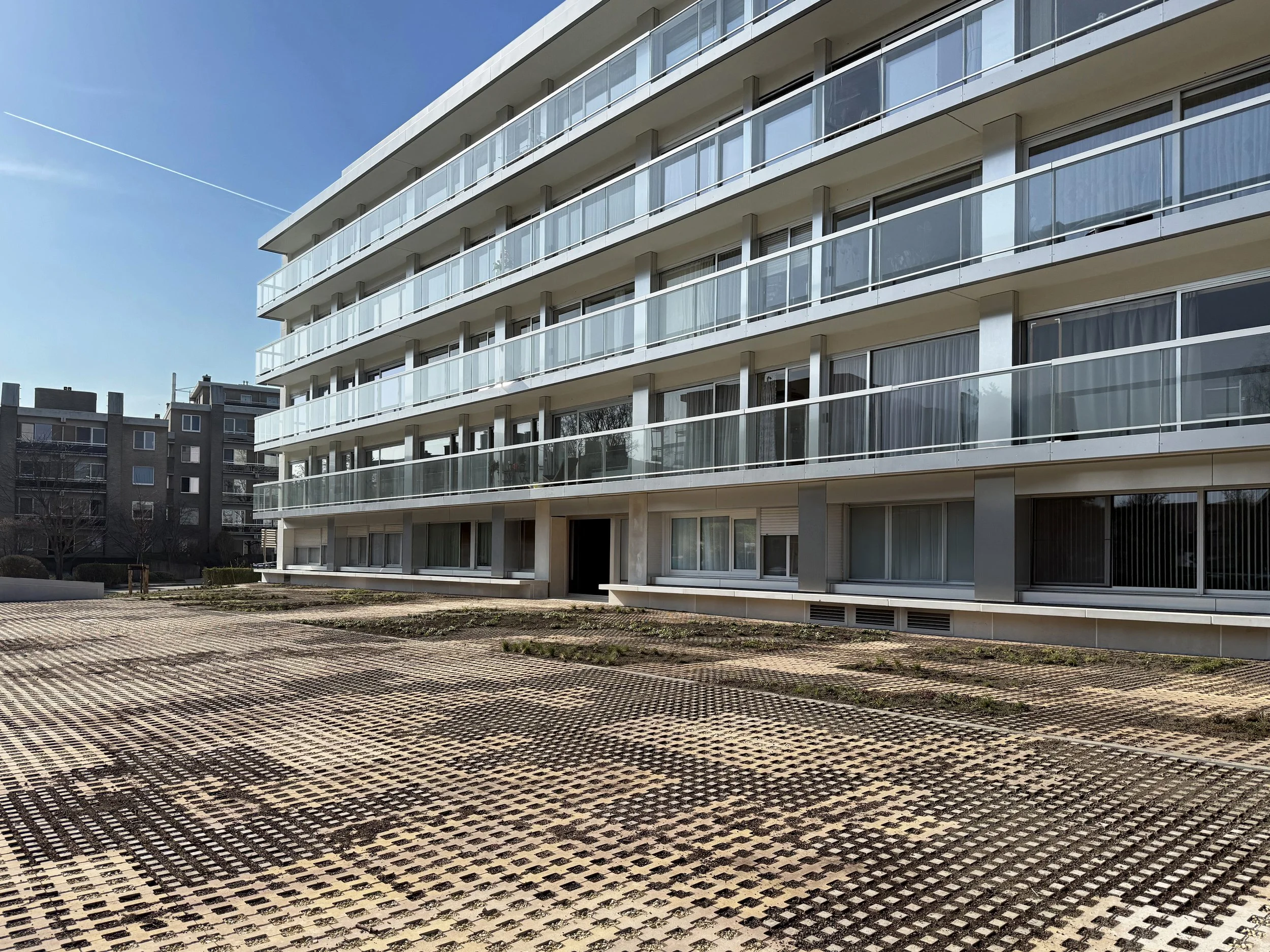
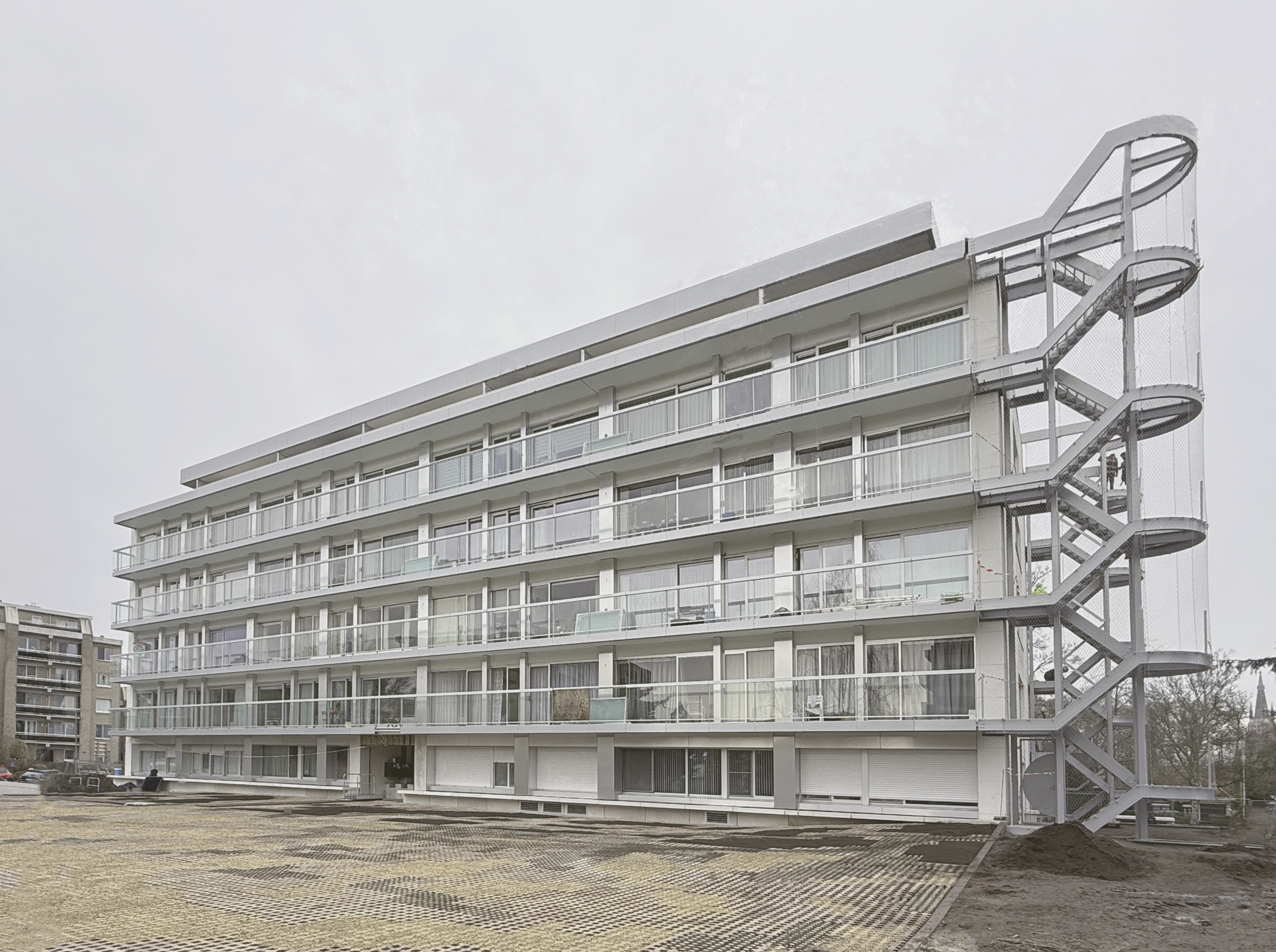
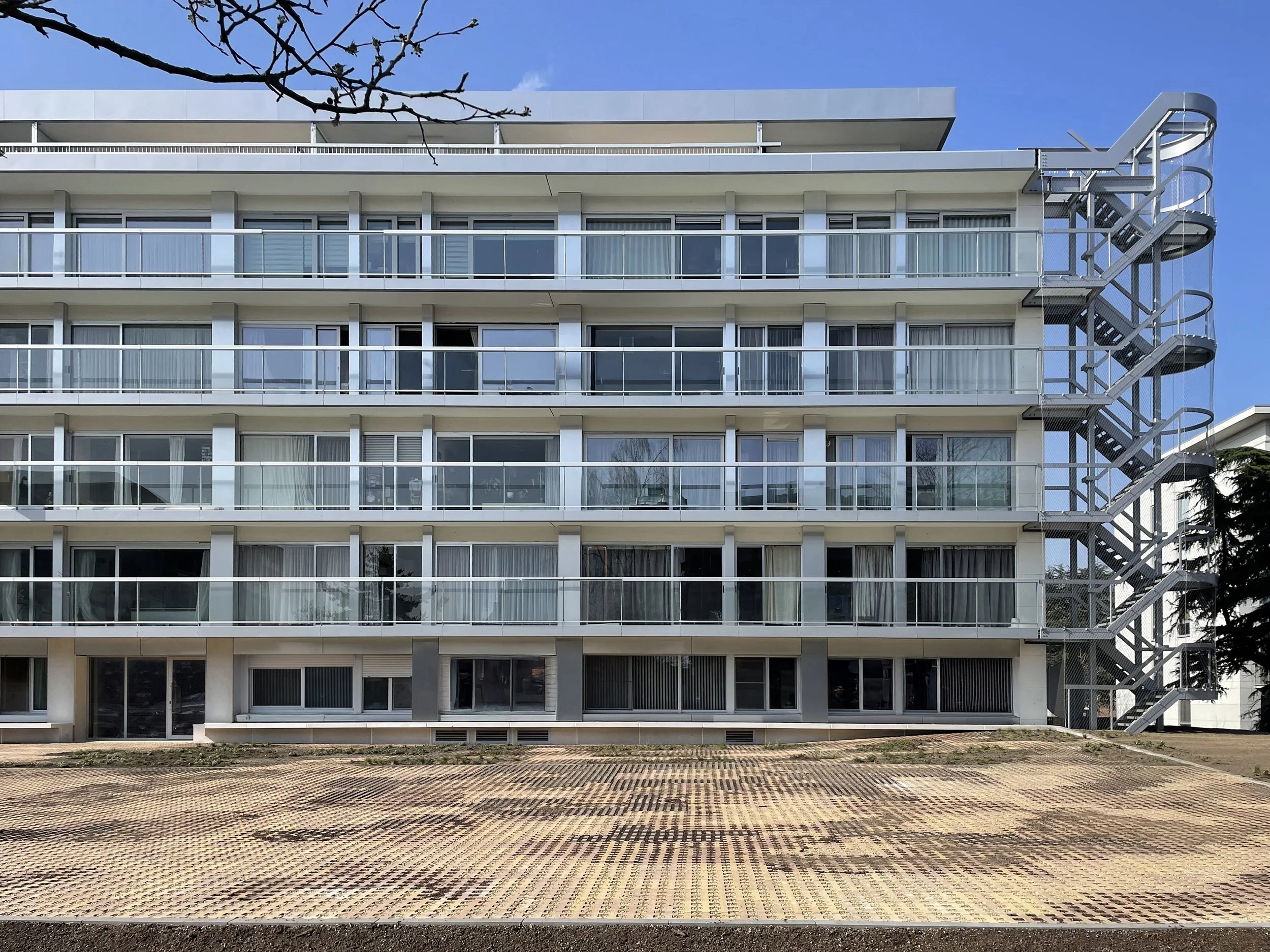
The façade was stripped back and renewed with light, reflective materials to soften its volume and enable it to reflect the changing tones of the surrounding landscape. This reduces the building's visual weight and situates it more precisely within its environment.
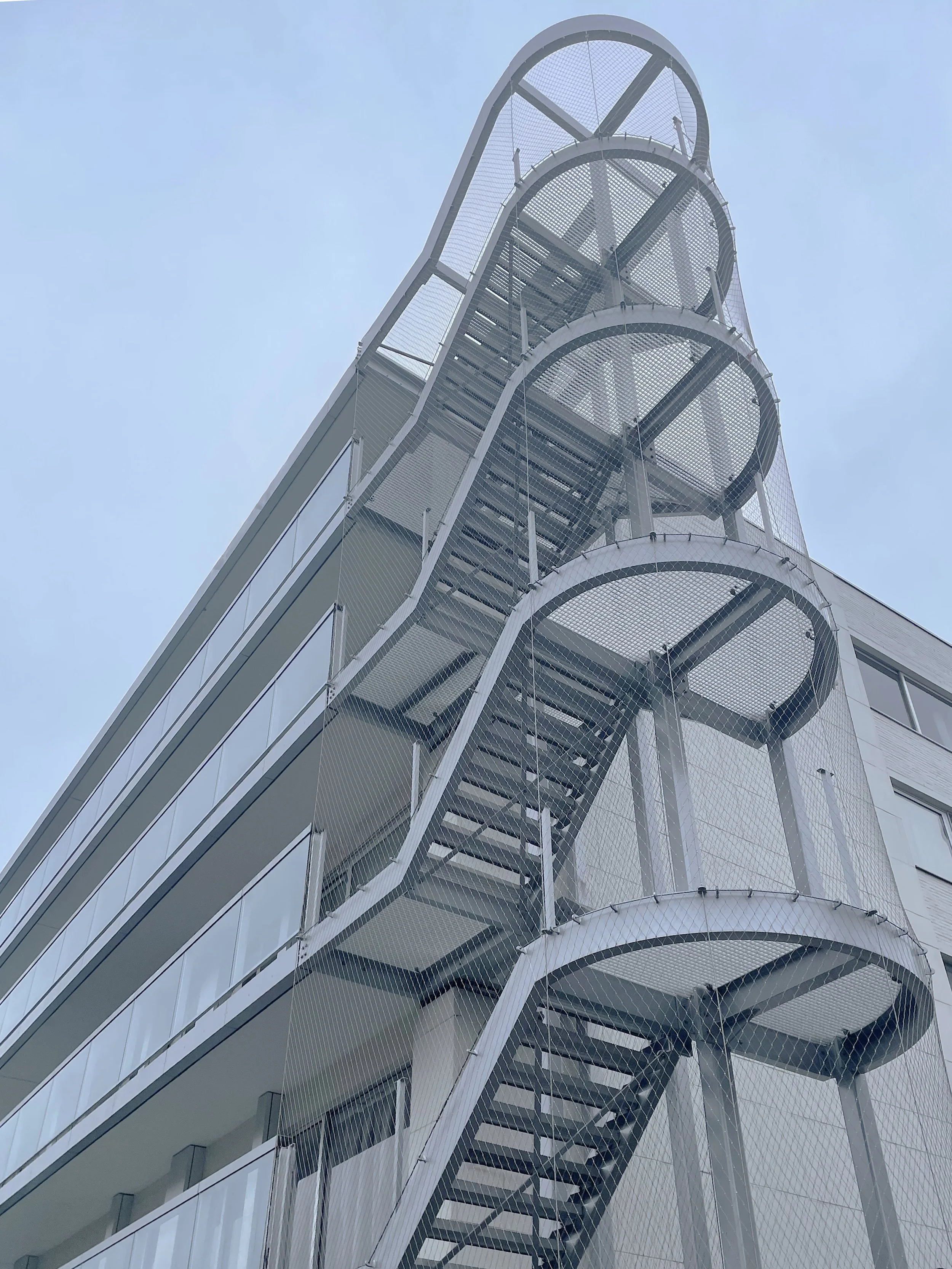
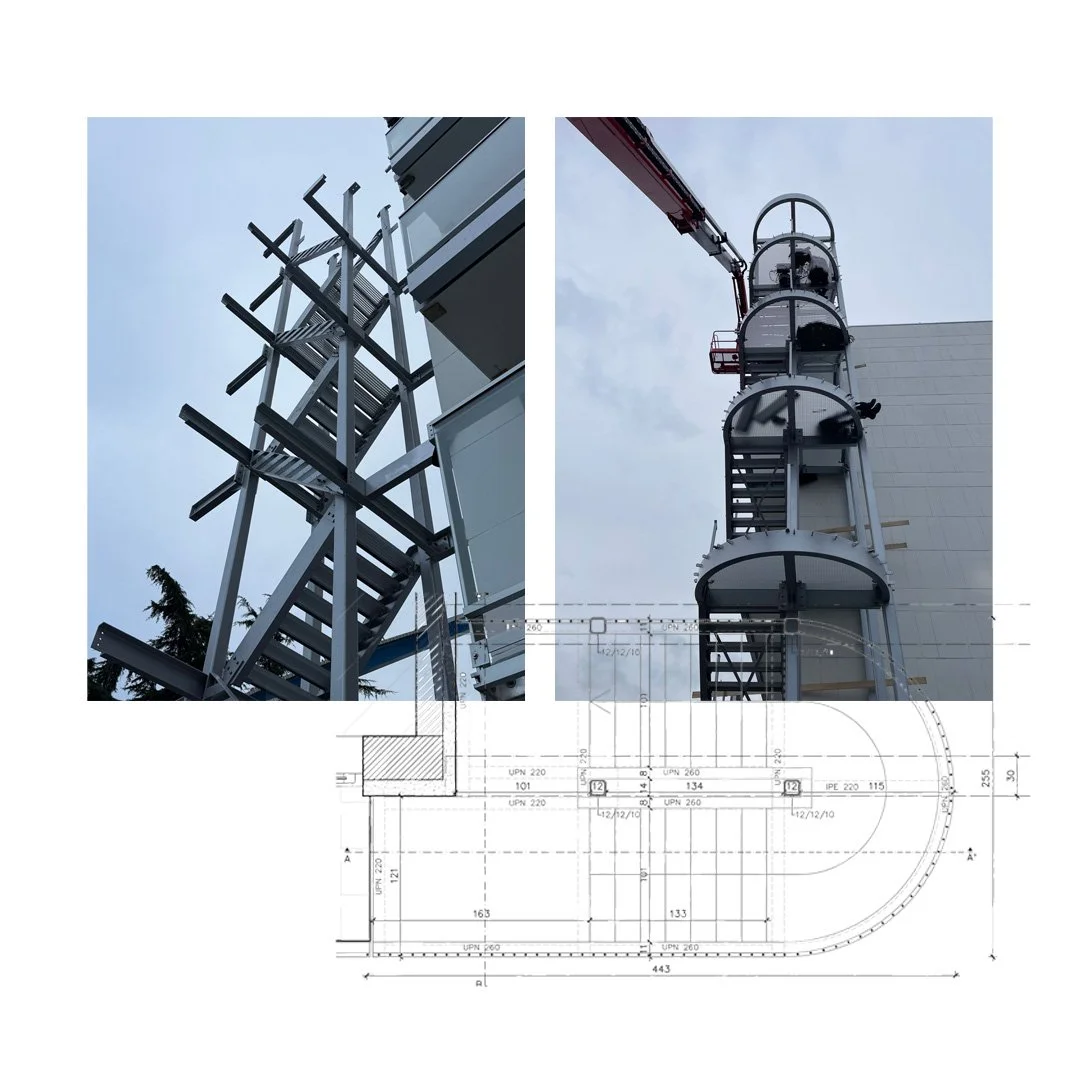
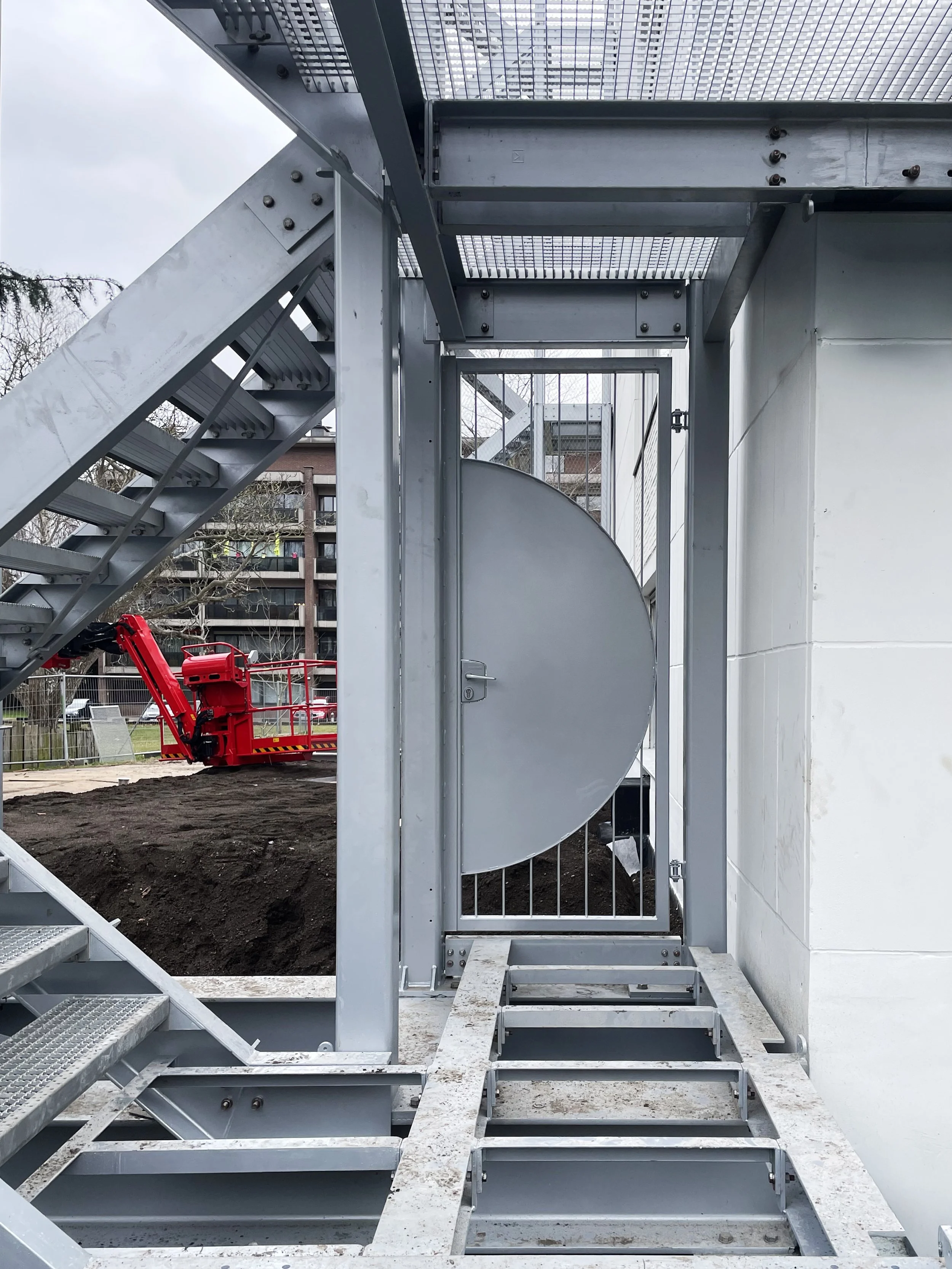
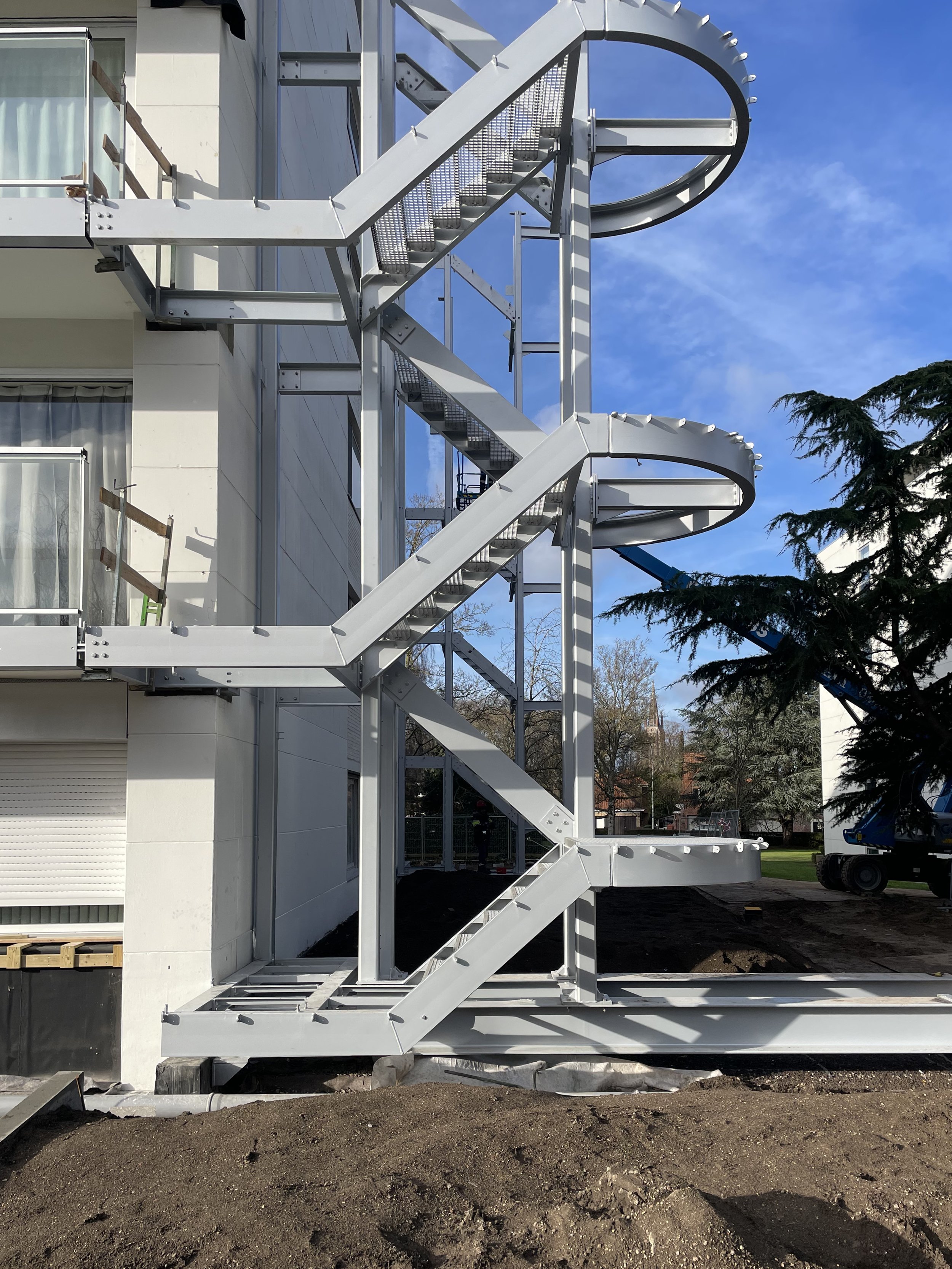
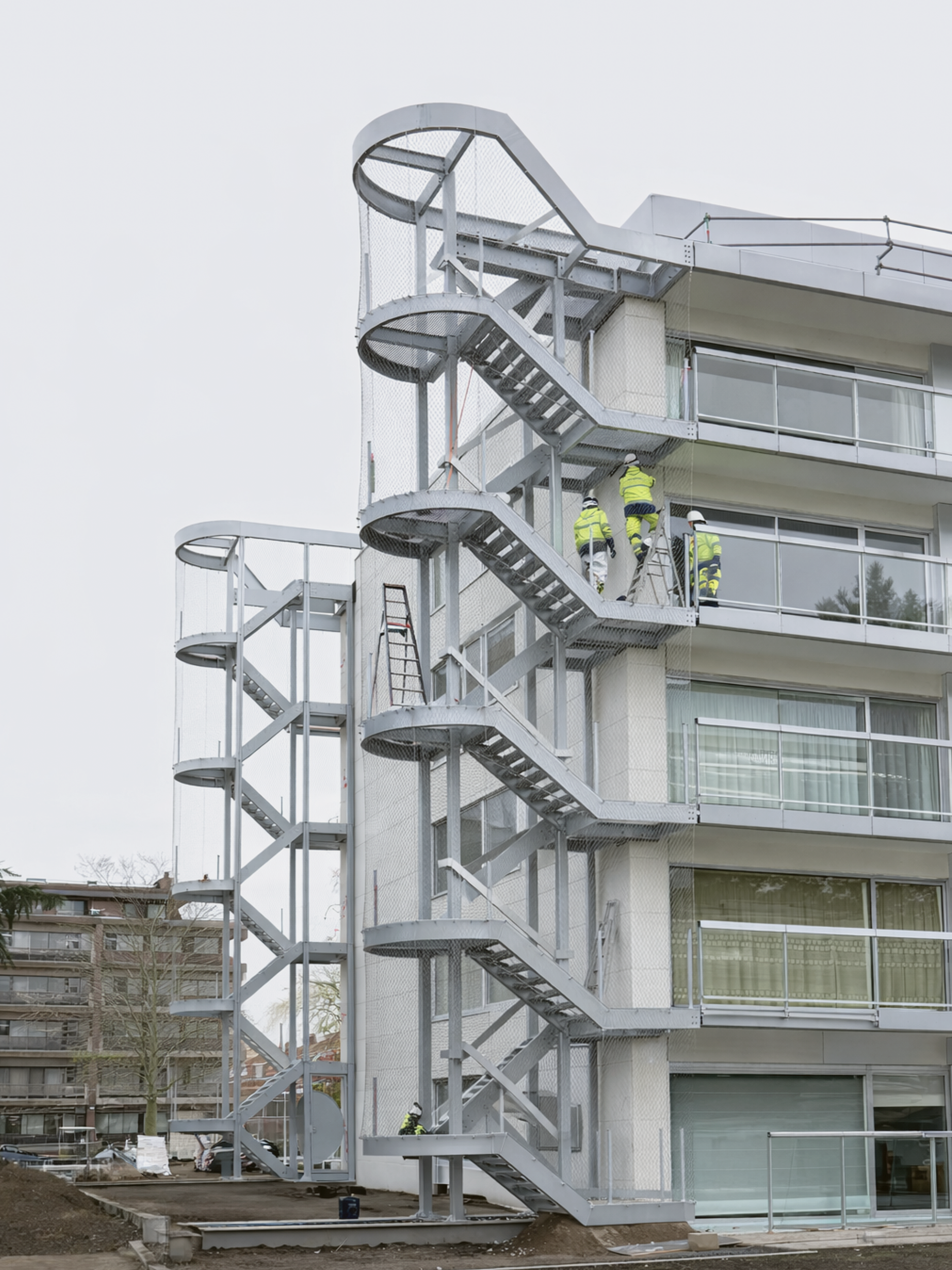
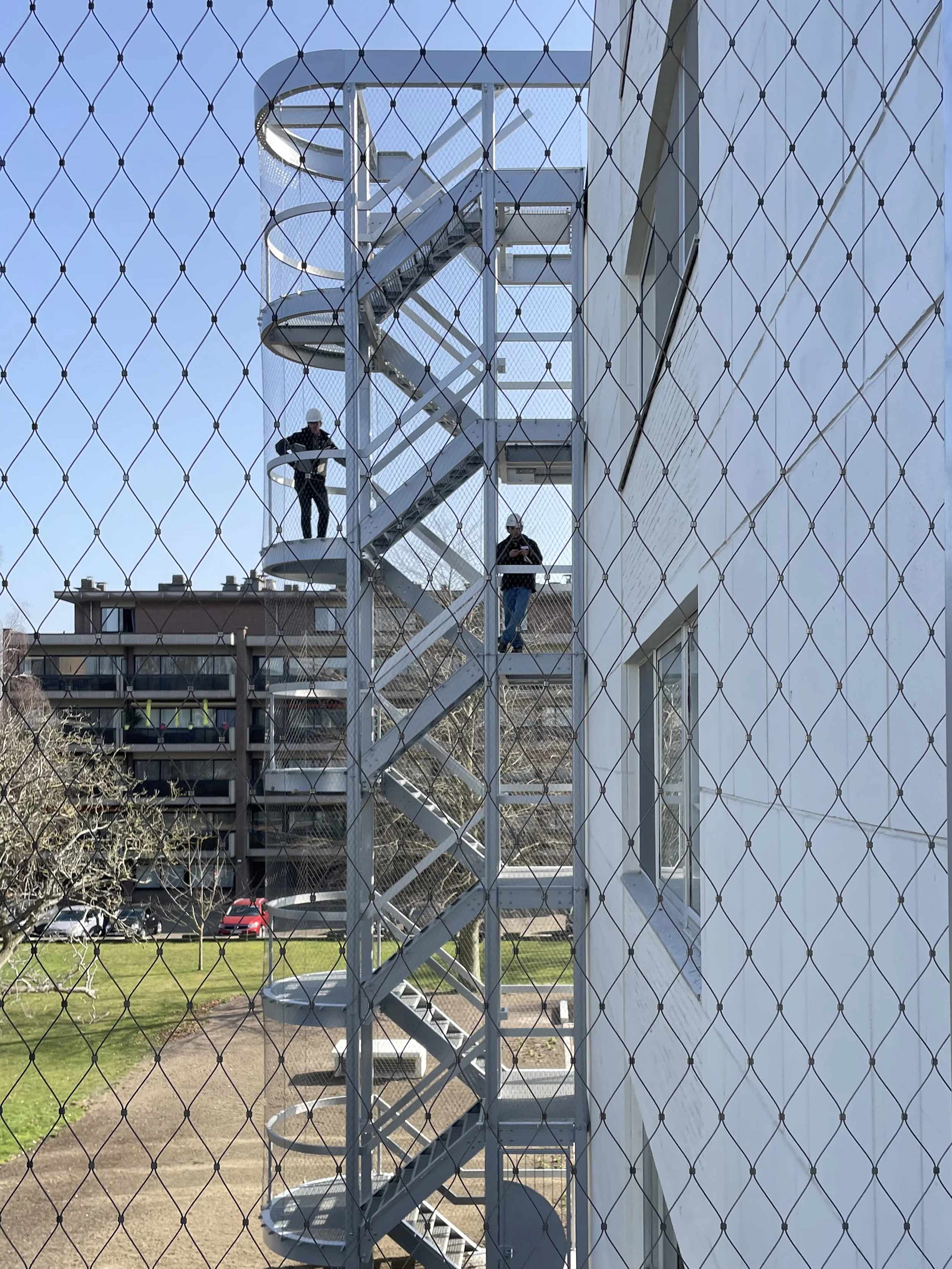
Fire safety is addressed by adding an external staircase — a compact, rounded metal structure that is attached to the building as a distinct architectural feature. This cost-efficient solution avoids the need for internal restructuring and simultaneously gives the otherwise anonymous post-war structure a new identity.
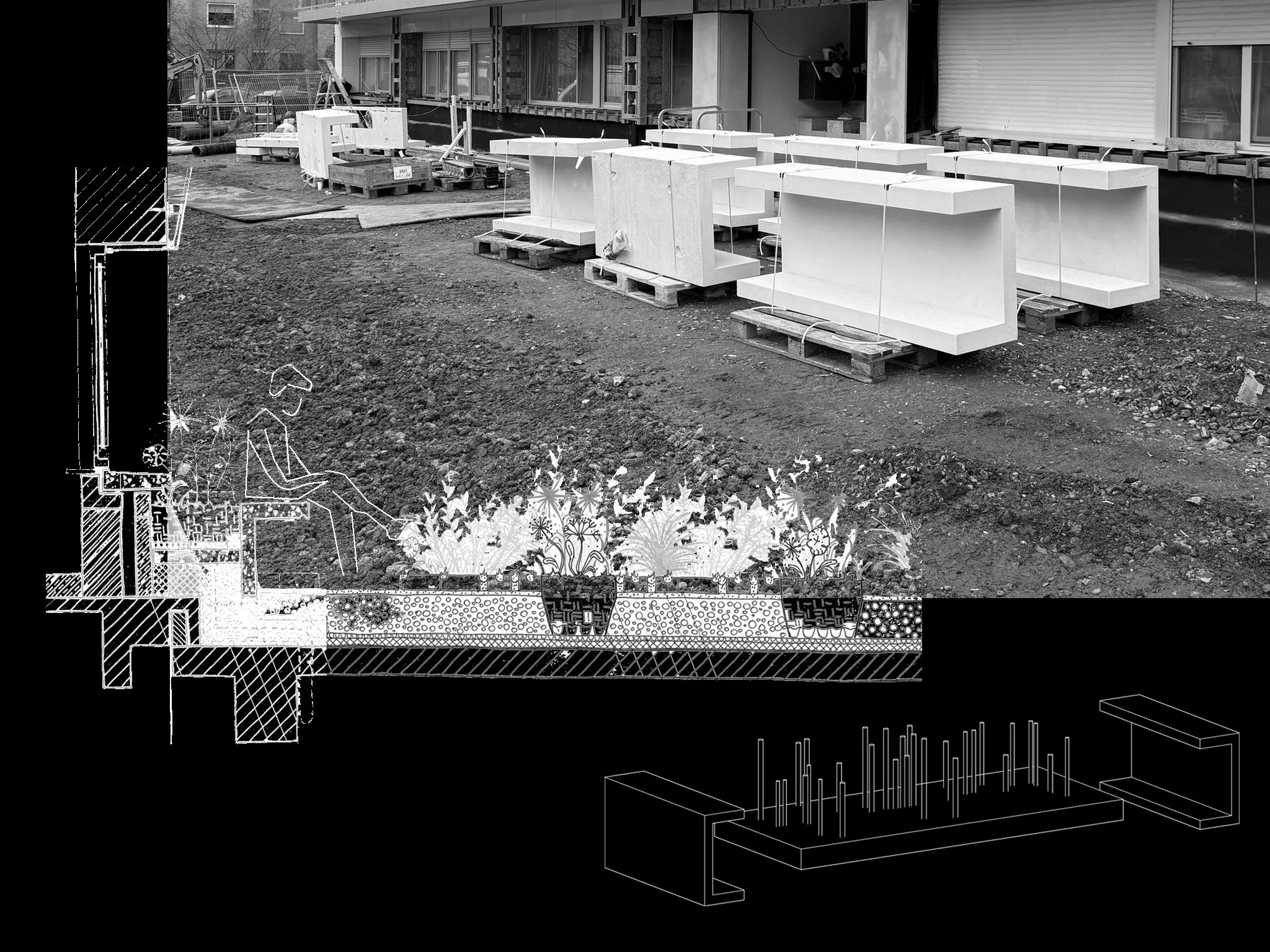
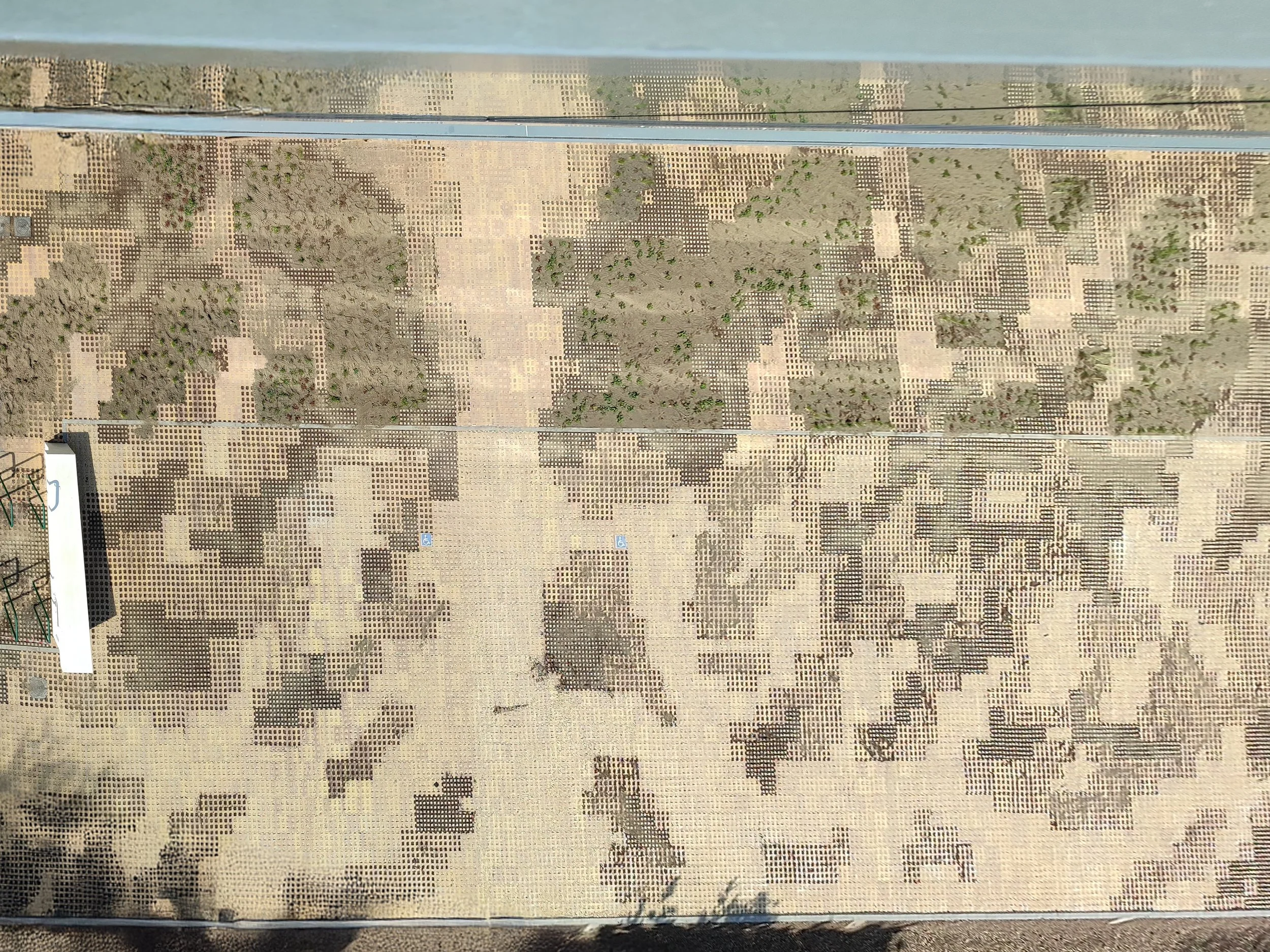
At ground level, the project avoids fixed separation between parking and landscaping. Instead, the outdoor space is conceived as a continuous, adaptable surface. A gradient of paving and planting enables the area to accommodate various activities throughout the day, ranging from circulation and parking to informal gatherings and play.
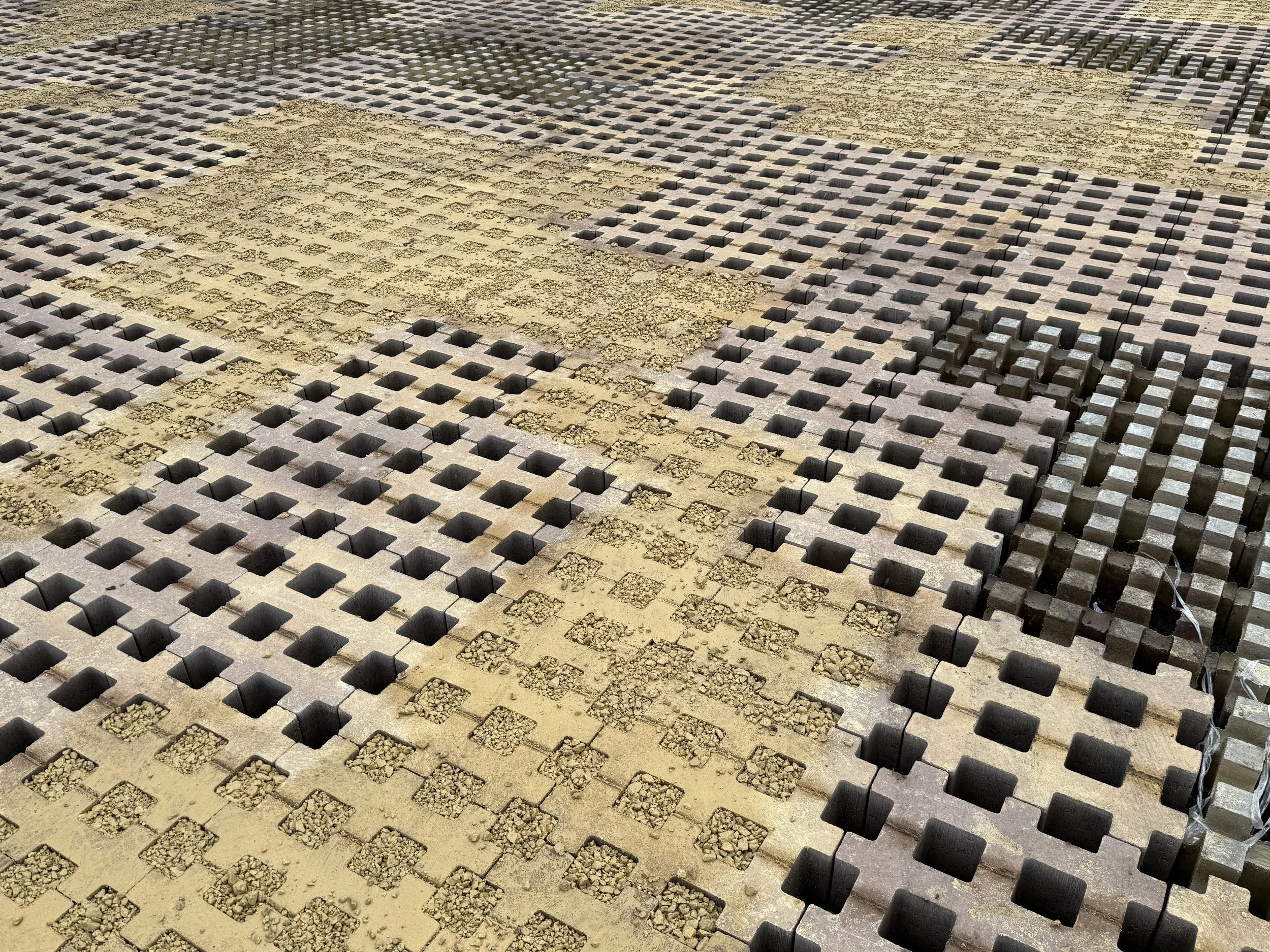
Pixelated pavers embedded in the ground allow vegetation to grow through, creating an intermediate condition between hardscape and landscape. Movement across the site is deliberately non-hierarchical, encouraging the use of multiple paths rather than prescribing a single circulation route.
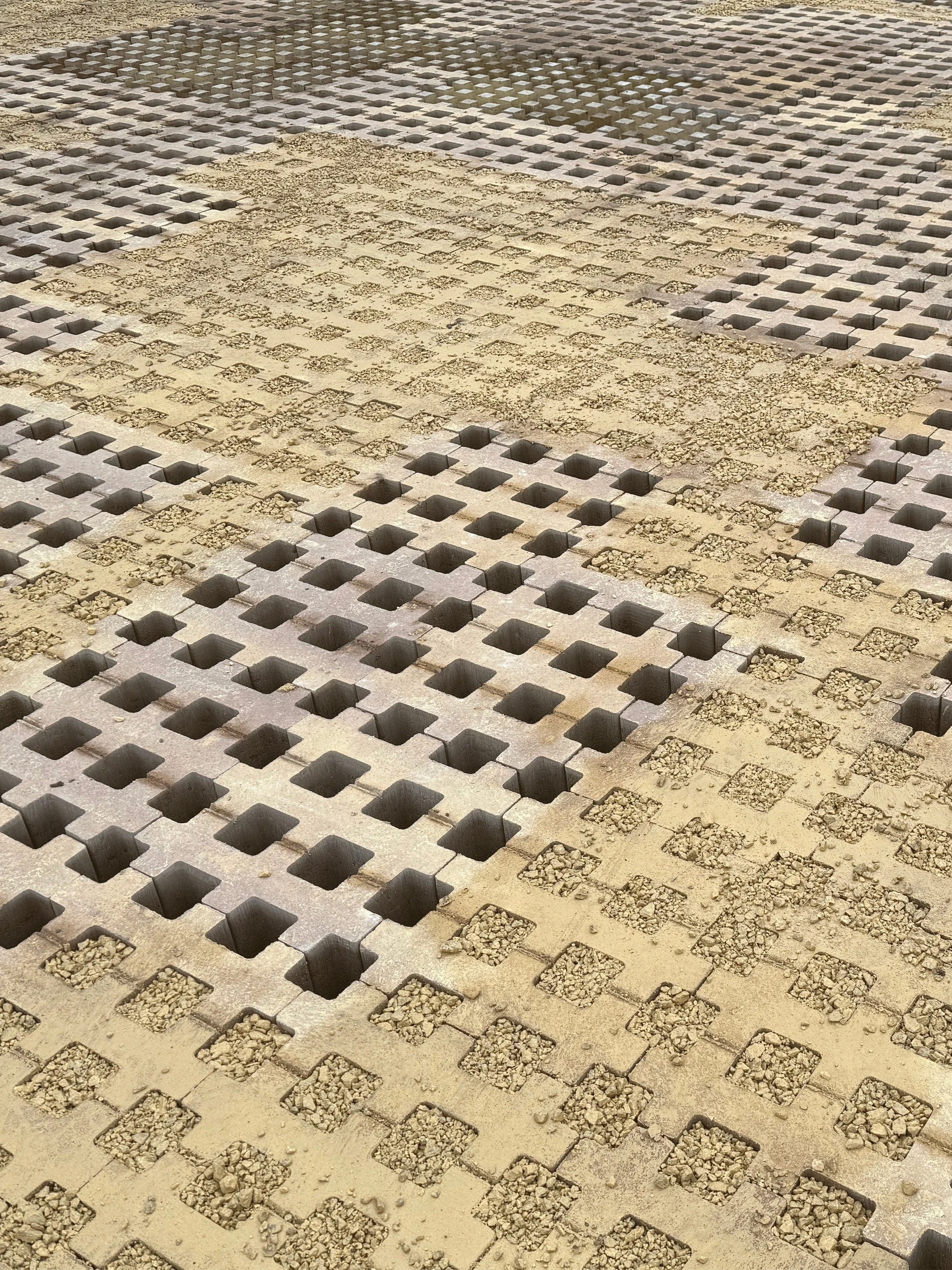
Process
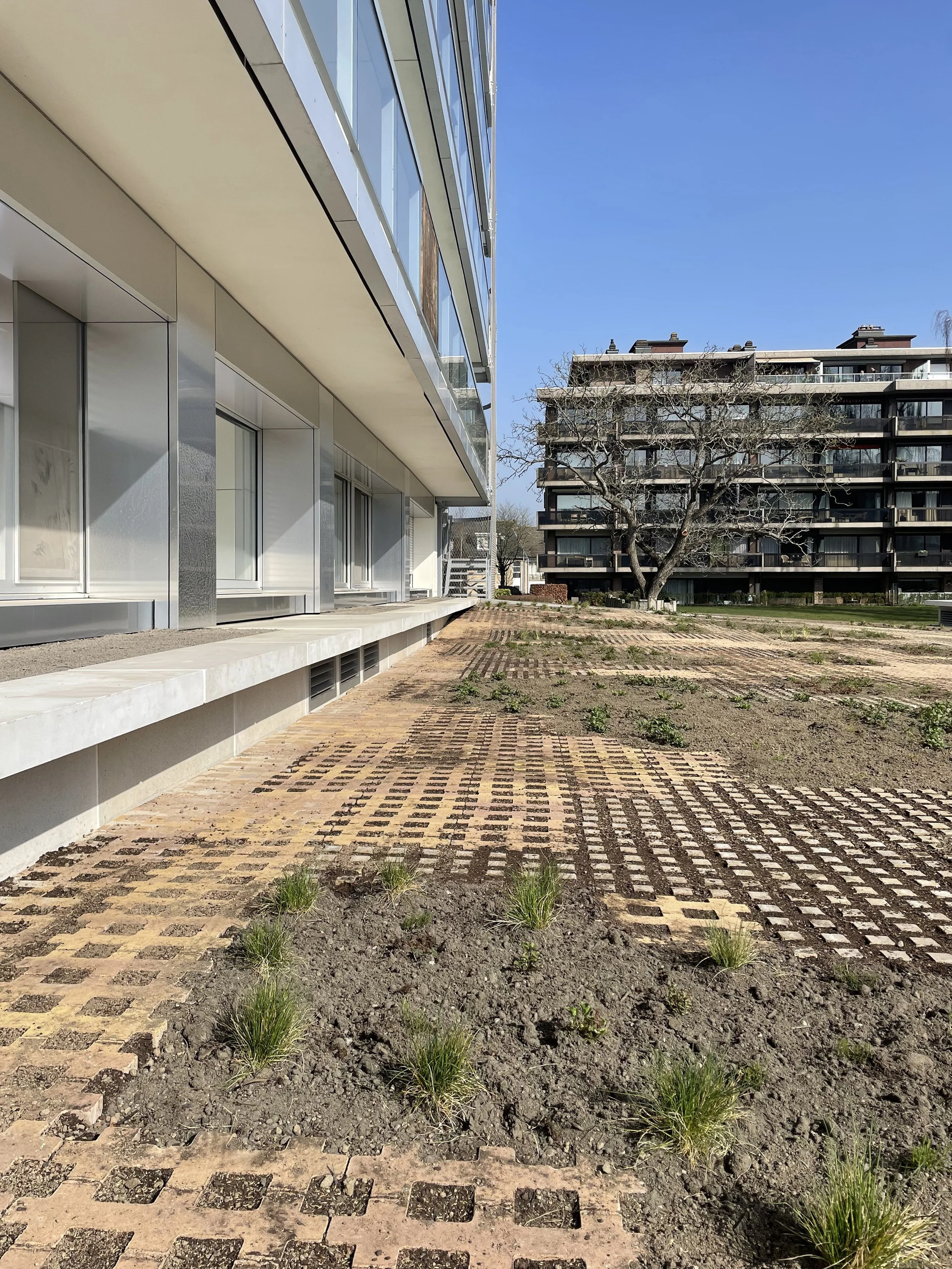

The result is a more resilient, open environment where technical requirements are integrated into a broader architectural and landscape strategy. The building has been not only repaired, but also repositioned within its context — it is now more embedded, flexible and aligned with its surroundings.
In collaboration with Redevelop Belgium.