HOUSE FOR TWO NEIGHBOURS
HOUSE FOR TWO NEIGHBOURS
Two neighbours asked us to design additions to their row houses that expressed individuality and worked as a cohesive whole.
Year → 2015 - 2016
Status → Completed
Team → de baes architects
Area →
Photography → Johnny Umans
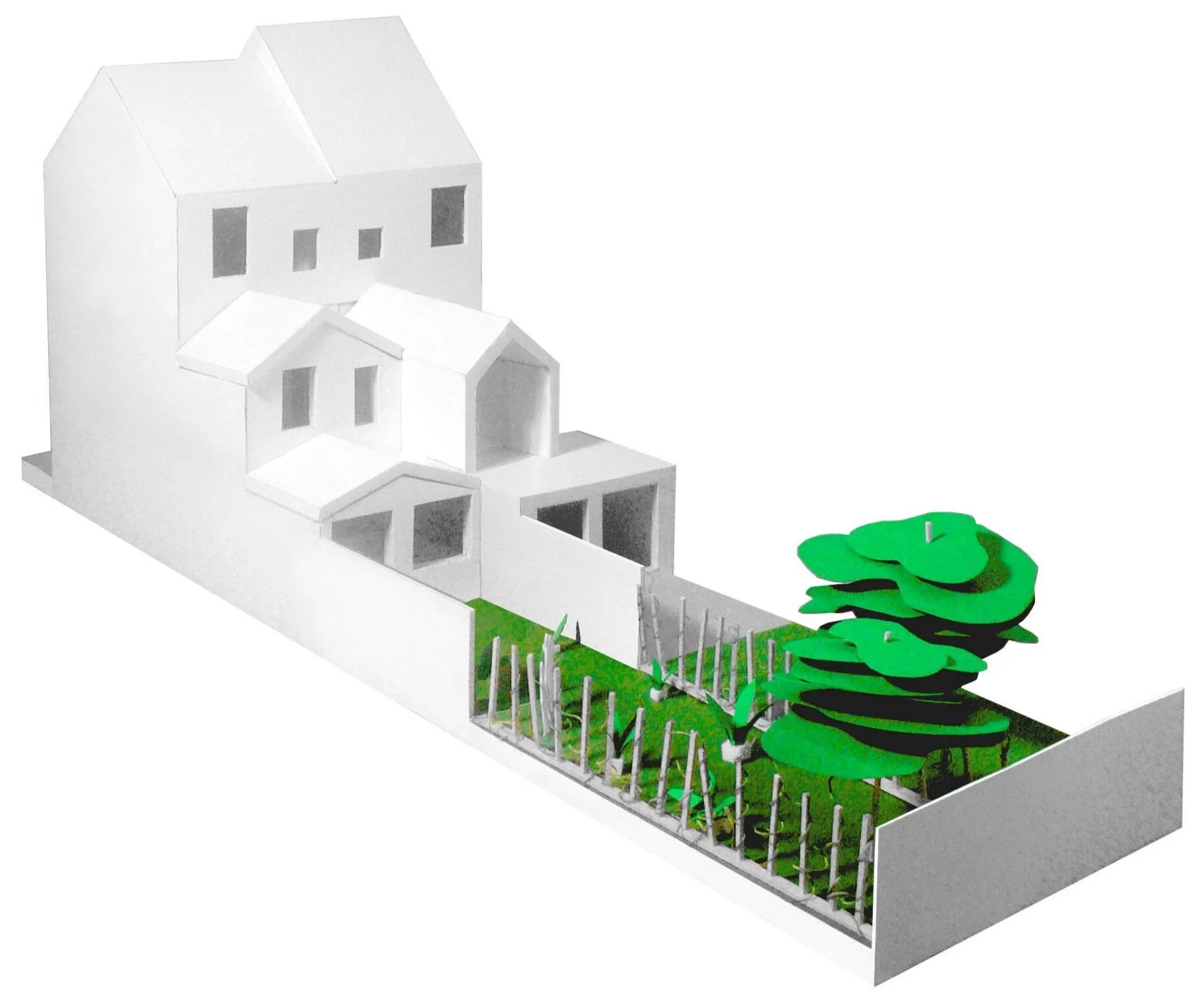
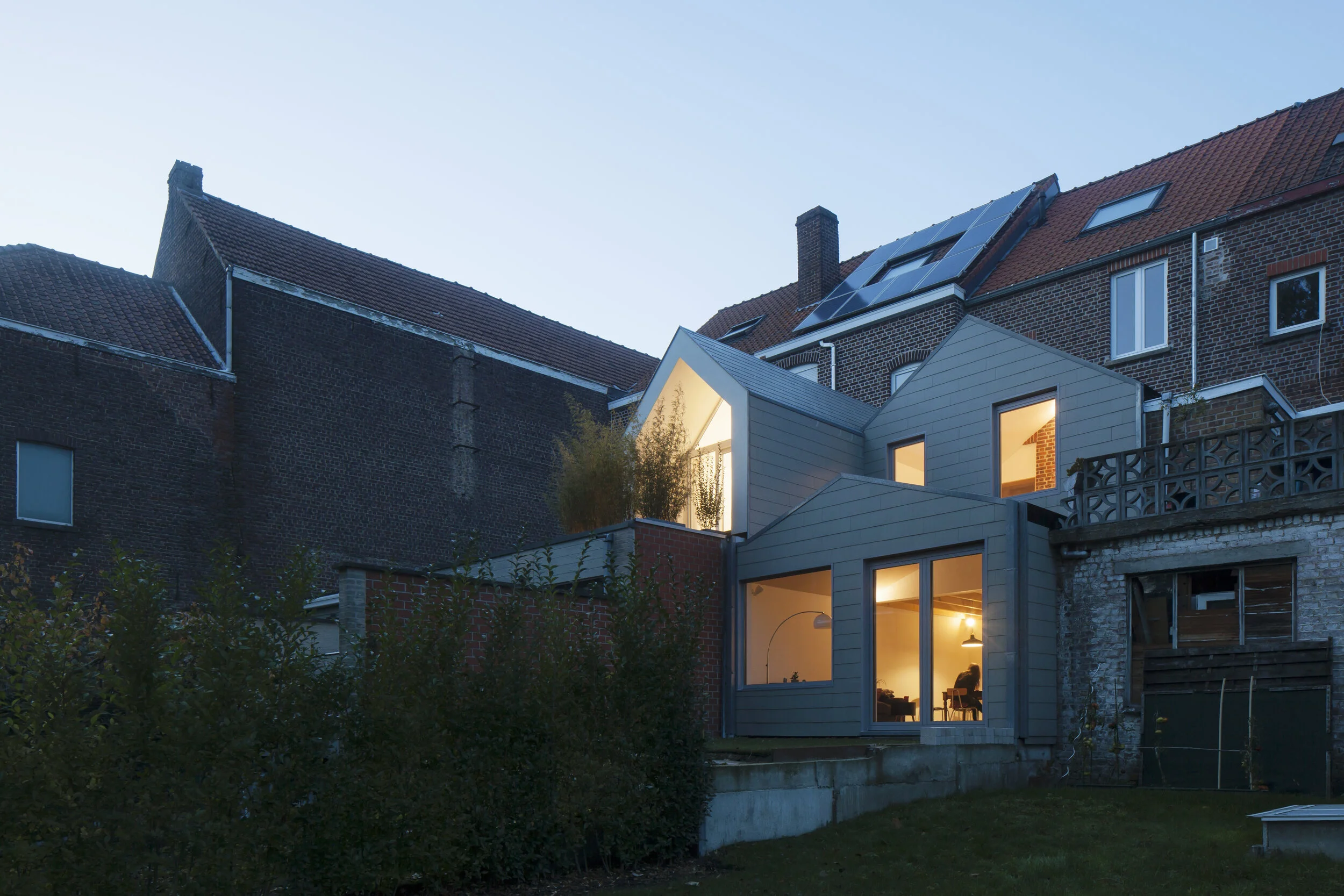
This project brings together two row-houses that shared a party wall belonging to neighbours who wanted to develop together. Their goal was to create two rear-yard extensions that were both individual and worked together as a cohesive whole. The project was an opportunity to find new ways to creatively advance the Flemish architectural tradition of distinctively individuated houses that yet cohere with their context.
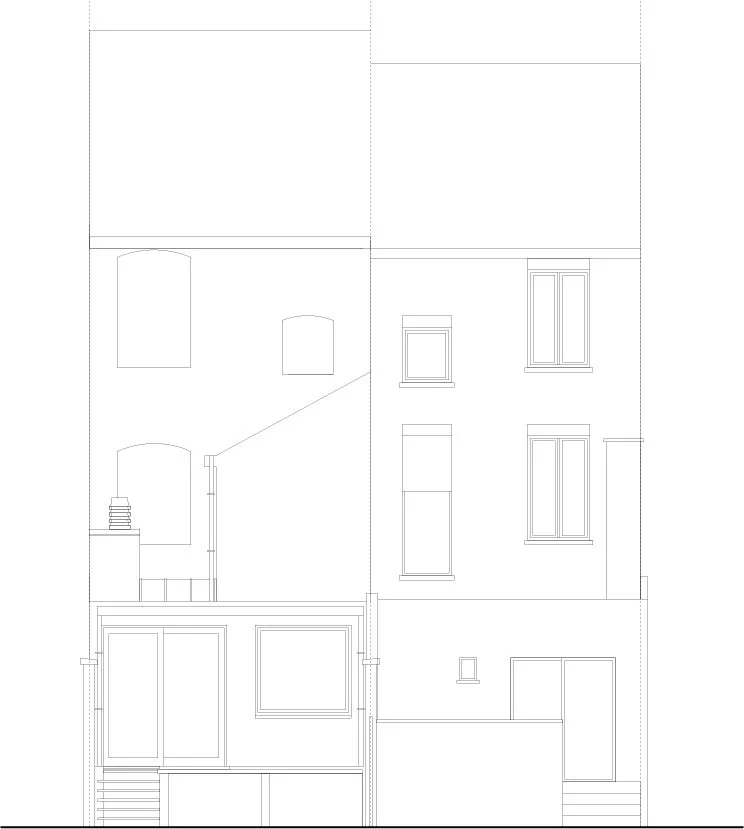
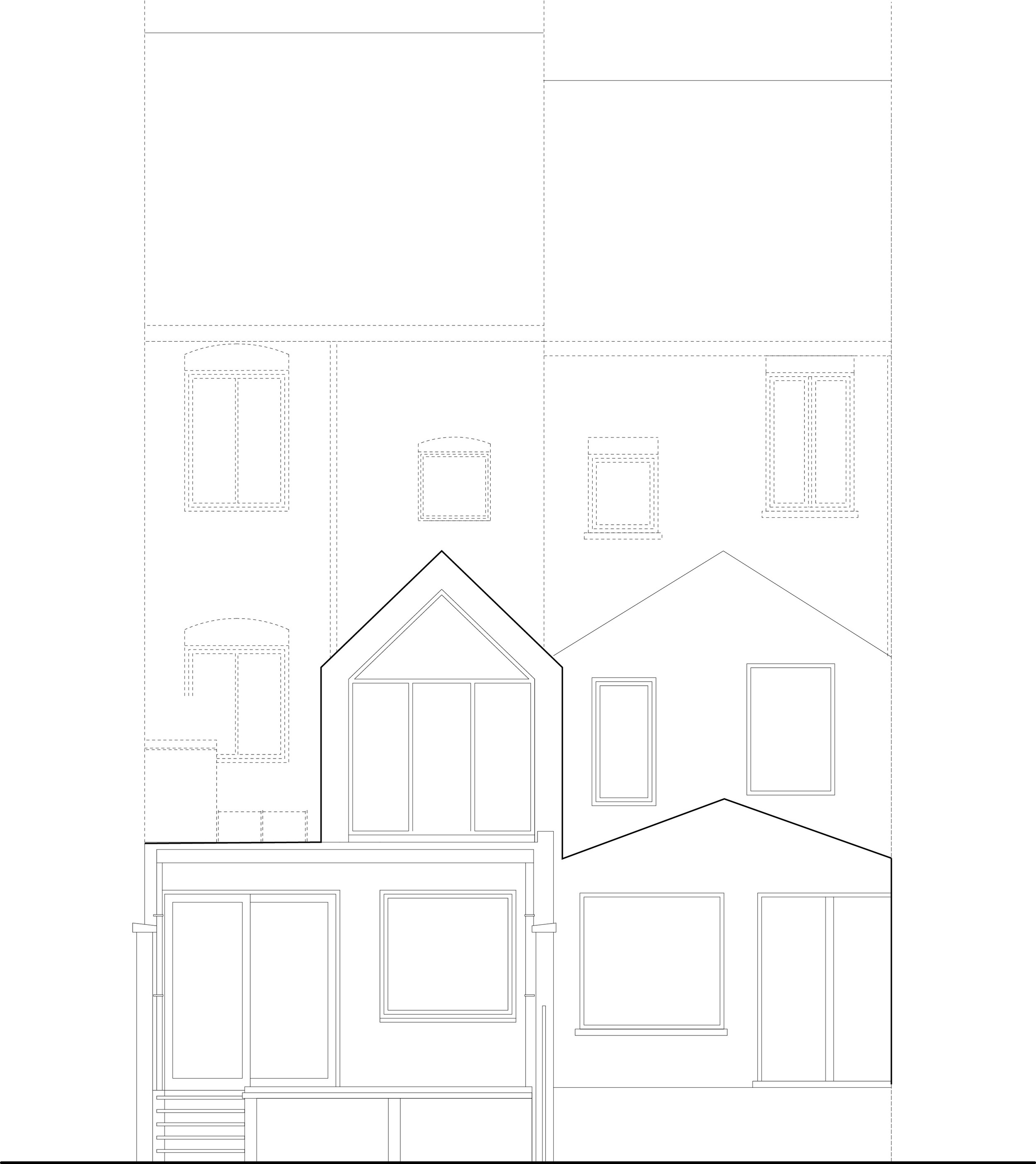
left: old façade - right: new façade
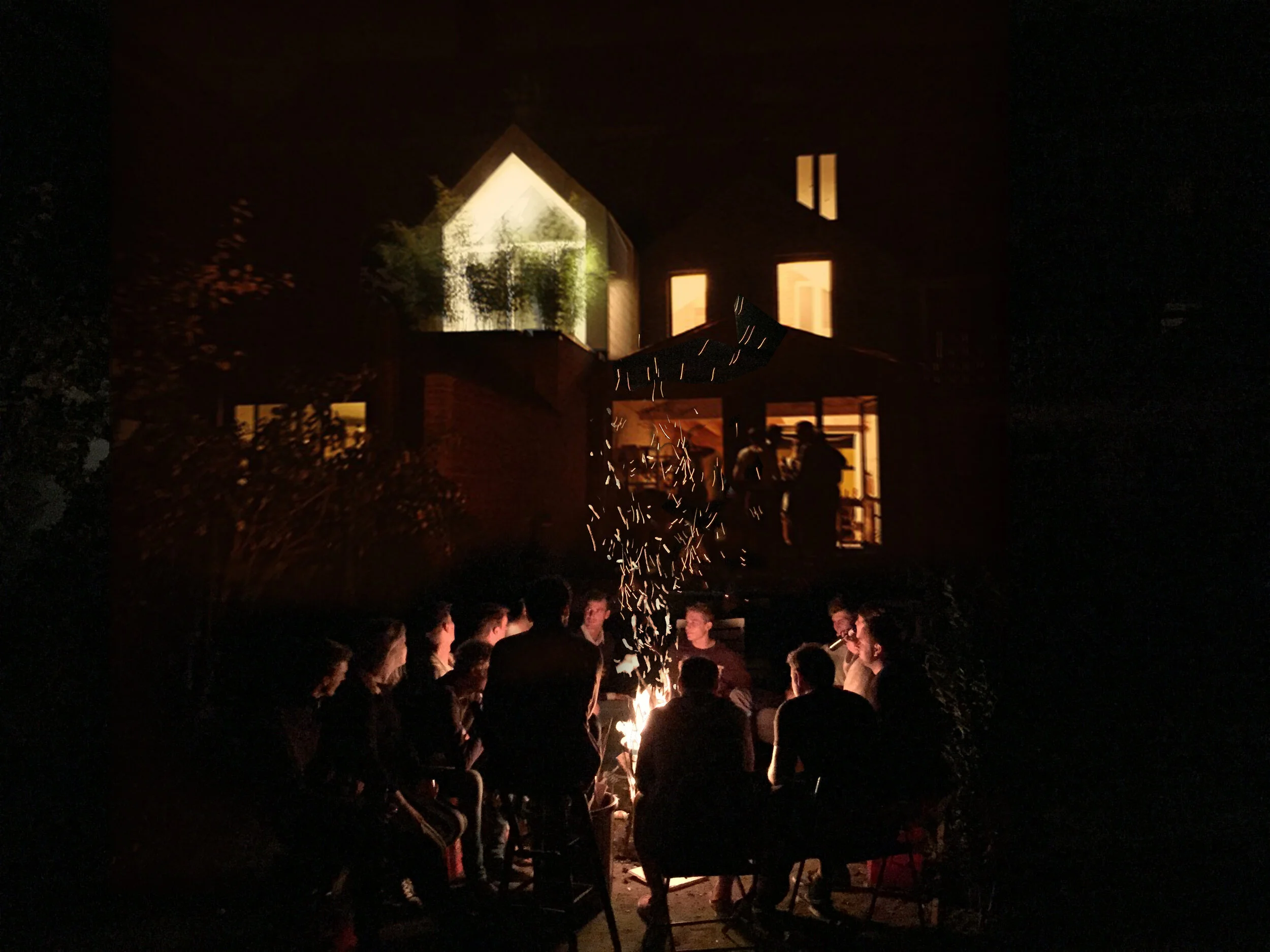
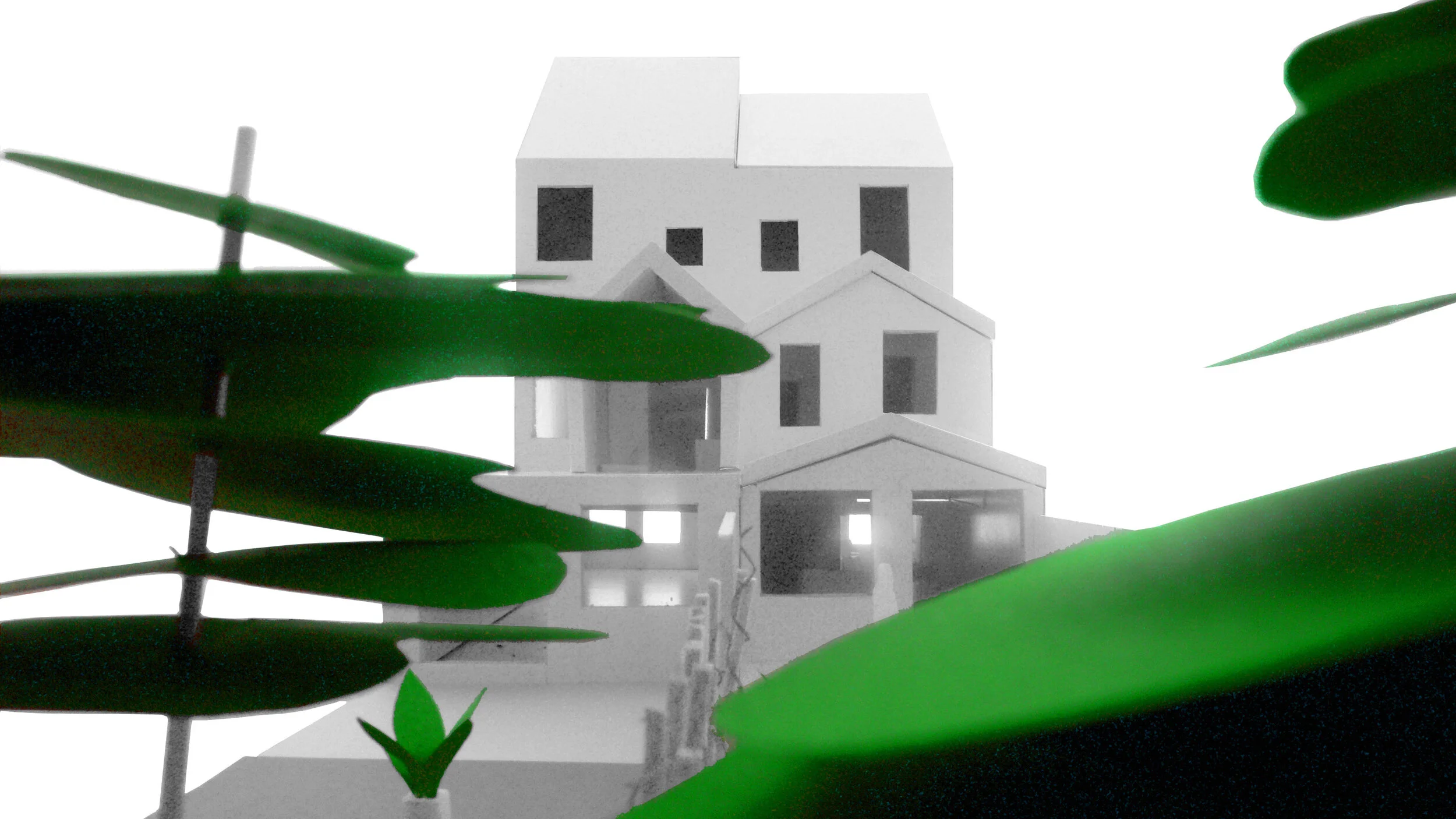
Shared Vocabulary, Distinct Expressions
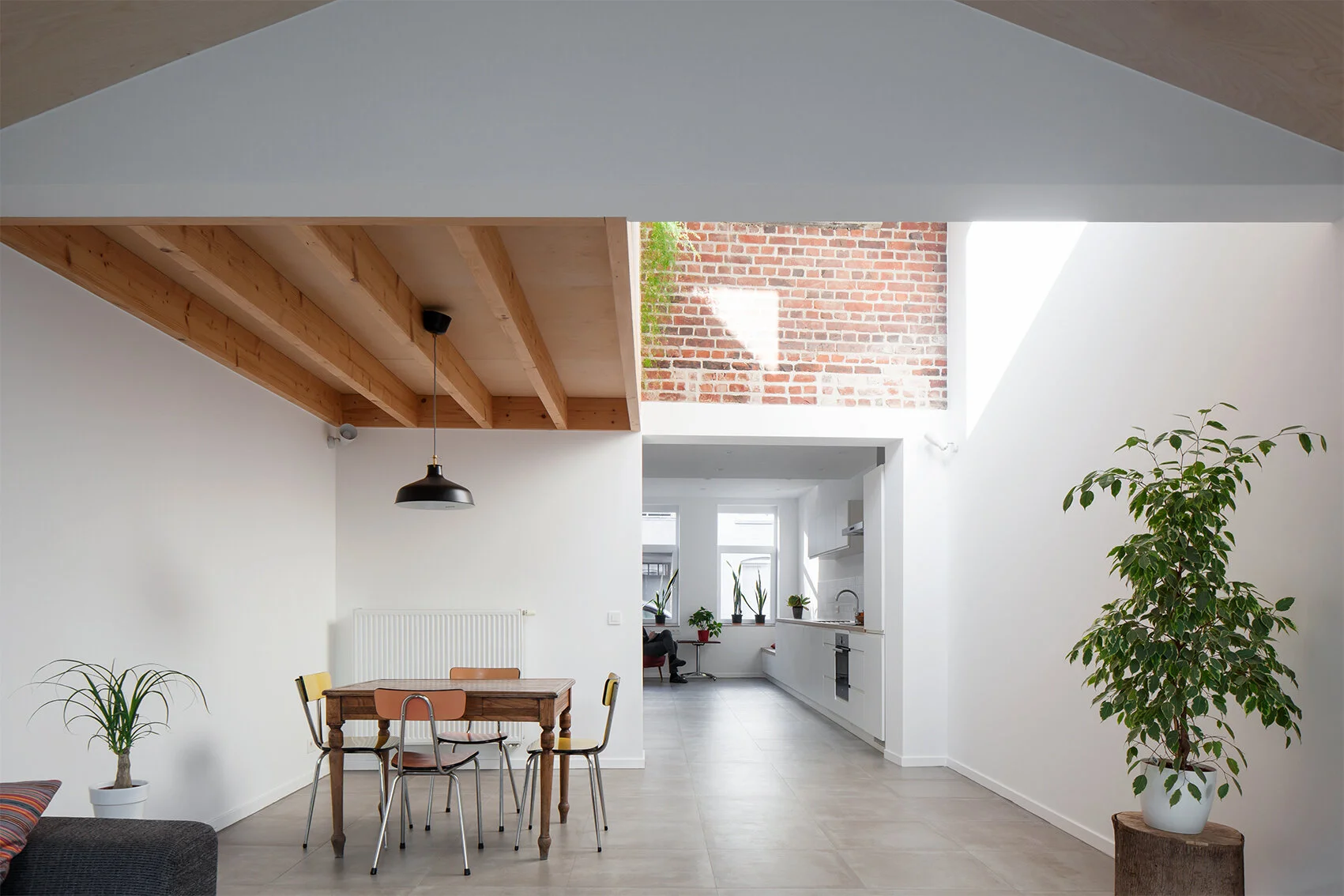
We started with a shared design vocabulary that reinterprets Flemish vernacular architecture in contemporary forms and materials. The design picks up on the type's gabled roofs and punched windows, recombining these elements to create two individual extensions. One of the additions stretches beyond the other and features a balcony covered with a gabled roof, creating a dialogue of solids and voids across the whole. This longer extension also enhances the sense of privacy in the rear yards, creating a wall that delineates the two. Inside, the additions retain a portion of the brick walls that had previously been exterior, expressing where the original volume ends and the new one begins.
New into Old
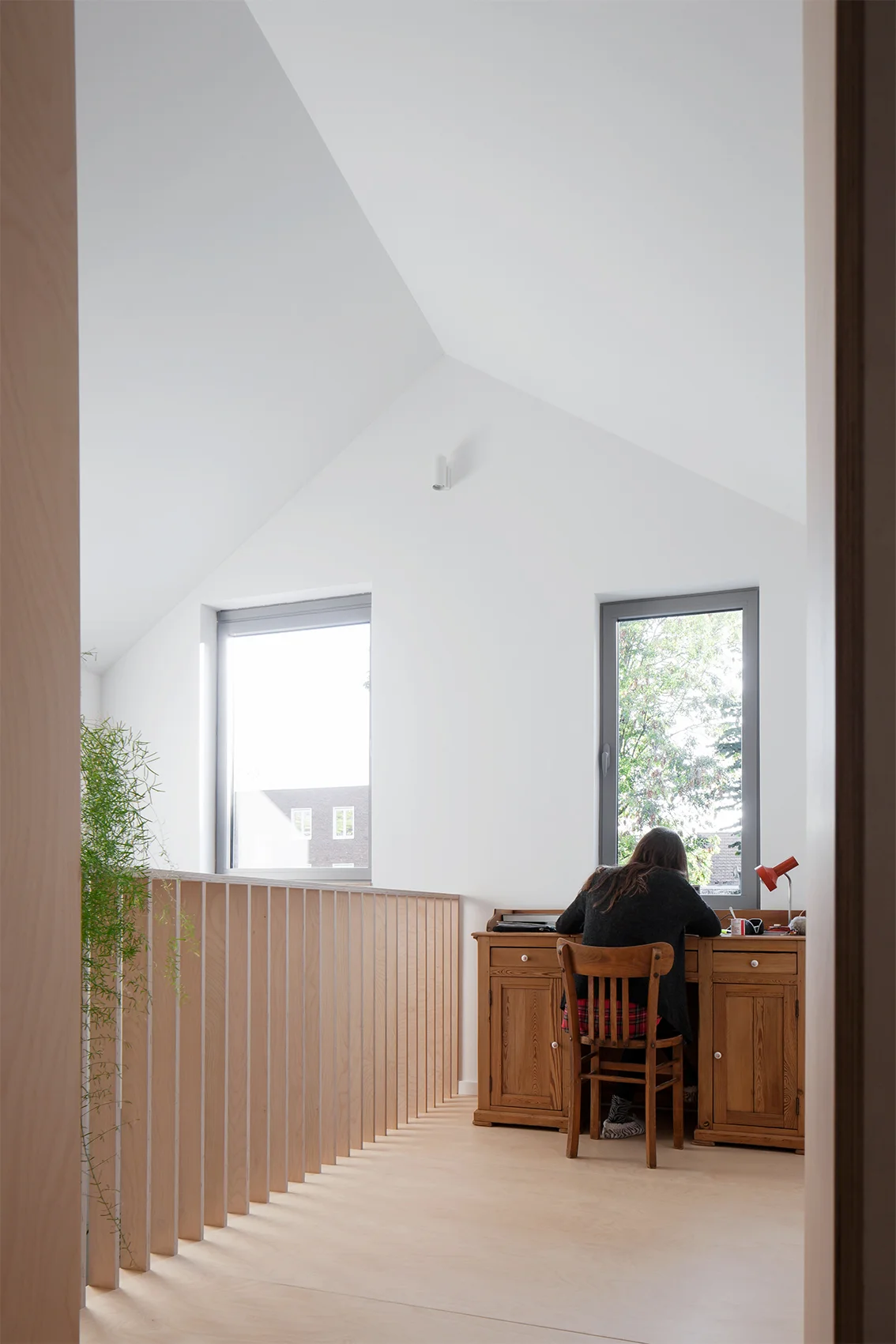
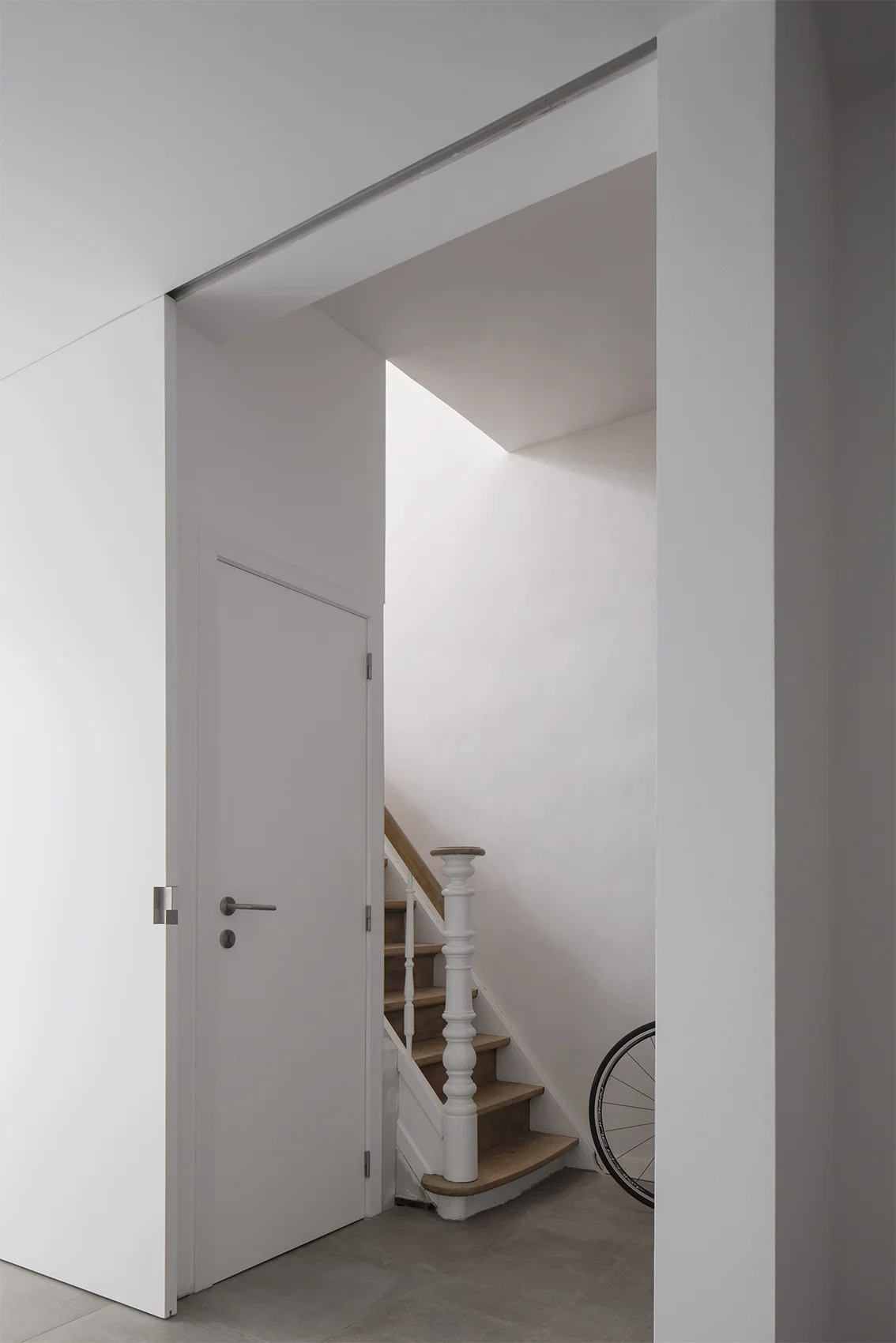
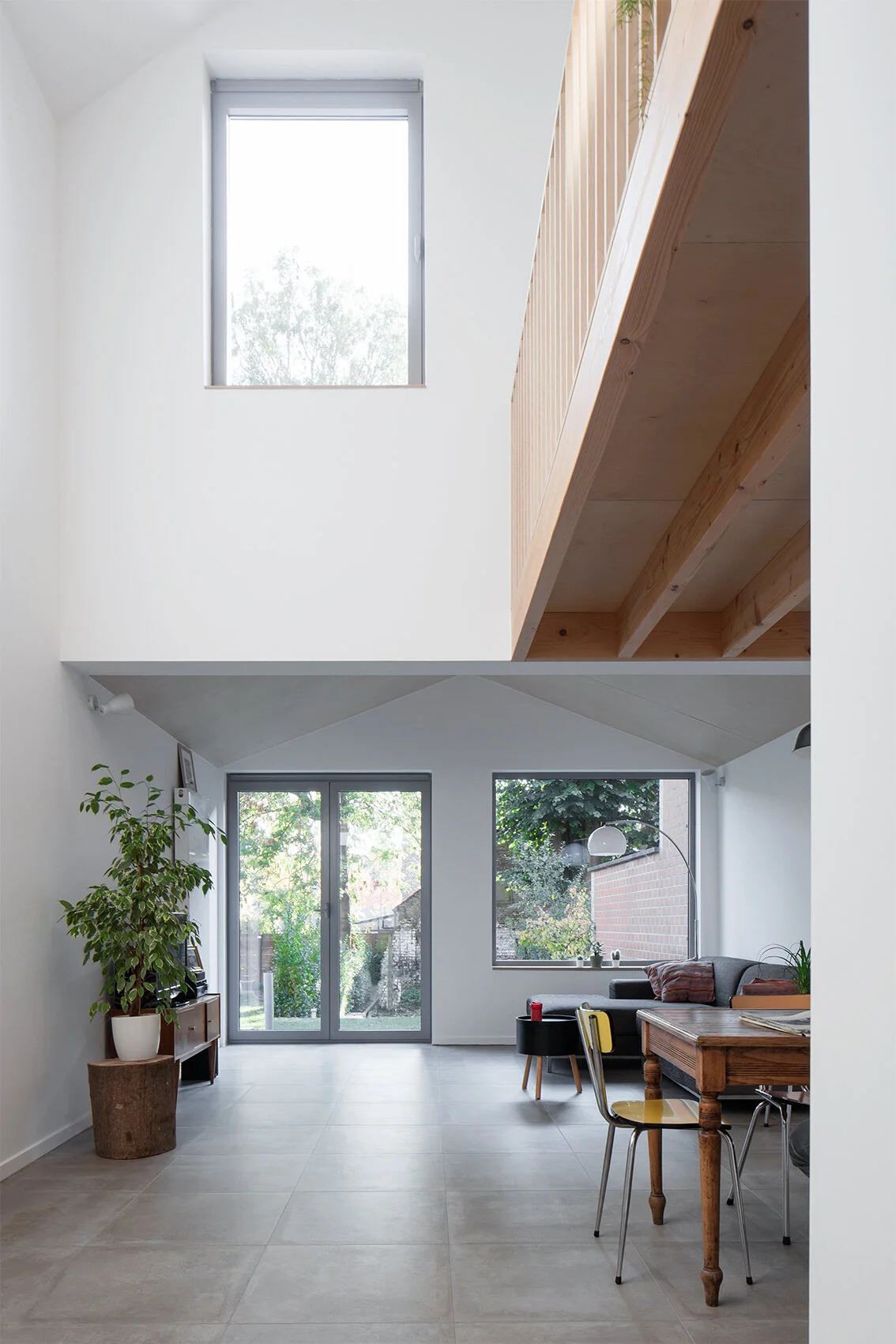
We remade the interiors into contemporary environments, stripping them down to emphasize their inherent architectural character and removing a part of the existing exterior wall to offer long, open, light-filled spaces. In one extension, a partial second floor overlooks the ground-floor dining area. The configuration creates interconnectivity across the levels and brings daylight from the second-story windows to the ground floor. By integrating the extensions with the existing volumes in these ways, the additions complement and extend—rather than eclipse—the original spatial qualities of the houses.